I still remember the really heavy raining season in 2018. I was visiting a textile factory near Coimbatore and the moisture in the air was so high a person could practically drink it. The factory manager was at a loss of words as three of their main conveyors stopped working in the middle of the huge export order. As we dismantled the housings, the bearings seemed as if the had been dragged through a swamp. They were imported high-end “international” products but they could not withstand the local environment of dust, moisture and heat.
That’s when it hit me. The issue was not the imported bearings per se; they were just not designed for our conditions. We replaced them with locally-made ones, triple-lip sealed and heavy-duty cast iron, no doubt, and I wouldn’t be surprised if they are still running now.
Seriously, consider the pillow block bearings which India manufactures: not only is it cost-effective but, also, the manufacturers here have achieved that perfect combination of durability and robustness. If you are a purchasing manager or engineer of a factory, deciding on procurement solely based on price per unit may not be really the right approach. It is about uptime that counts.
What Actually Makes an Indian Pillow Block Bearing “Reliable”?
“Reliability” is a term that gets thrown around quite casually but it actually has a very precise and technical meaning in the industrial context. When you order Pillow Block Bearings India, it is a product that has been developed specifically for a totally different environment than that of the European or American factories.
1. The Metallurgy: Beyond Basic Cast Iron
Cast iron is the most popular material for housing but the grade is what really counts. Indian top-notch manufacturers boast of FG200 or FG250 gray cast iron. This goes beyond just the weight component; it plays a very significant role in the damping of vibrations.
- Tip for the readers: You should always inquire about the housing material grade. The one that is too light will be prone to cracking under shock loads. It should give a “thud” noise when you knock it, not a “ting”.
2. The Insert Bearing: The Heart of the Unit
Housing just supports the insert while the insert does the actual work. Extended inner ring is featured in many Indian-made inserts. It allows for the load to get distributed over a larger region of the shaft.
The Strategic Advantage of Local Sourcing
Local is “low tech”? That’s a myth that needs to get busted. “Make in India” is the most popular directive now and that has changed the R&D budgets of the main Indian bearing hubs to a great extent.
Global Quality, Local Grit
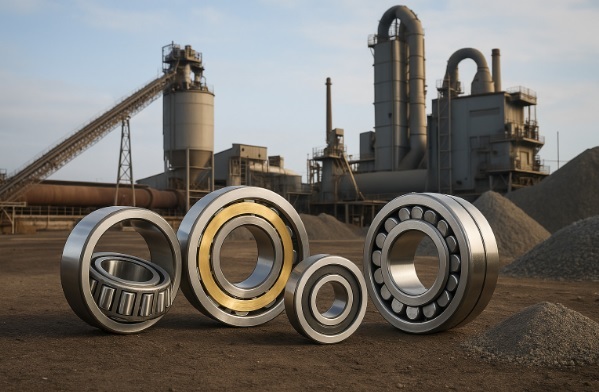
The Pillow Block Bearings India make today are not only of the highest standards in terms of finish and accuracy but, what’s more, they are even robust enough to be used in stone crushers environment of Rajasthan.
Customization is King
Unlike the big global companies, Indian manufacturers can change their physical operations extremely quickly.
- Advice: If your surroundings are quite harsh (chemical or high grit), request for custom Viton seals. Most Indian players will be able to change this one immediately while multinationals might only start the process.
Sourcing Checklist: 5 Things You Must Ask Your Supplier
When you are purchasing Pillow Block Bearings India-style, don’t just rely on the printed brochure. Get on the phone. Ask those tough questions. Here’s what I usually do:
- Locking Mechanism: Is it a set screw (standard) or an eccentric locking collar? A collar will prevent the unit from loosening due to vibrations.
- Type of Grease: Which grease do they use for packing? You need to know if the factory grease will have a chemical reaction with the one you will use later.
- Housing Tolerance: Is the bore “H7”? A too loose housing-to-insert fit will make the unit to “creep” which will lead to overheating.
- Seal: Do not pick just a basic rubber. For agriculture or mining, make sure that a “slinger” or triple-lip seal is offered.
- Load Ratings: Find out the static vs. dynamic load ratings. If the seller cannot immediately provide you with the numbers, then it is a middleman and not a manufacturer. Simply walk away.
Bonus: In India, many “dealers” claim to be manufacturers. Always ask for a factory visit or at least a live video tour of the CNC shop. A genuine manufacturer of Pillow Block Bearings India will be very happy to show you their heat-treatment plant.
Performance in the Field: Industry Specifics
Personally, I have witnessed these bearings in every nook and corner of the country.
Agriculture: The “Dust” Factor
Bearing failure in the agricultural sector is due to “contamination” rather than aging. Indian-made pillow blocks normally come with supplementary “shrouds” that prevent large debris from reaching the seal in the first place. It’s a simple, good, and efficient system.
Food & Beverage: The “Washdown” Struggle
This situation is no joke. If you’re working in a dairy or bottling plant, then you will be spraying the machinery with water and chemicals at night every day.
- Tip: It is best to go for thermoplastic housings or stainless steel inserts. Yes, they cost more but having to replace a rusted cast-iron block every three months is even more expensive.
Cost vs. Value: The “True” Price of a Bearing
To be honest, I have come across purchasing departments that have saved ₹200 on one bearing only to find that the total loss due to production stoppage was ₹2, 00, 000.
The biggest advantage of Pillow Block Bearings India is not the low price but the Total Cost of Ownership (TCO). When you supply locally, lead time goes down from 12 weeks to 12 days. You can keep smaller “safety stock” and your capital won’t be tied up in a warehouse full of spares “just in case” the ship from Germany is delayed.
Final Thoughts: Making the Switch
Not saying that you have to throw your current suppliers away overnight. I am saying, though, that if you have not been paying attention to the quality of Pillow Block Bearings India recently, then you are missing out.
Technology has caught up with it. Metrology is very reliable. And the product “toughness” is, at my professional estimation, definitely unmatched at that price point.
Begin with a single machine. You know the one the one that always breaks down just after midnight and needs a new bearing. Replace that one with a high-grade Indian pillow block. Observe the vibrations. Take temperature readings. I think you will be amazed at how quiet and cool it is running.
Flawless operations do not require you to have the most expensive parts in the world. They require the right parts for the environment. And for the Indian and global industrial environment, that quite often means looking right here at home.
FAQ: Quick Hits for the Busy Engineer
Q: Can I replace a Japanese pillow block with an Indian one directly?
A: Yes, as long as the “Bolt Hole Center-to-Center” distance and the “Base-to-Center” height match. The majority of Indian manufacturers comply with international standard dimensions (UCP series).
Q: Is “Plummer Block” the same as “Pillow Block”?
A: Good question. Many times they have been used interchangeably, but actually, a Pillow Block normally indicates the lightweight, pre-assembled unit with a ball bearing. On the other hand, a Plummer Block is a big, split housing that is used with spherical roller bearings for very heavy loads.
Q: How often should I grease them?
A: It is the heat and speed that determine this, however, here is a useful rule of thumb: if the housing is hot when touched, then you are either over-greasing or under-greasing. Keep a properly calculated grease schedule; don’t just grease when you remember.