

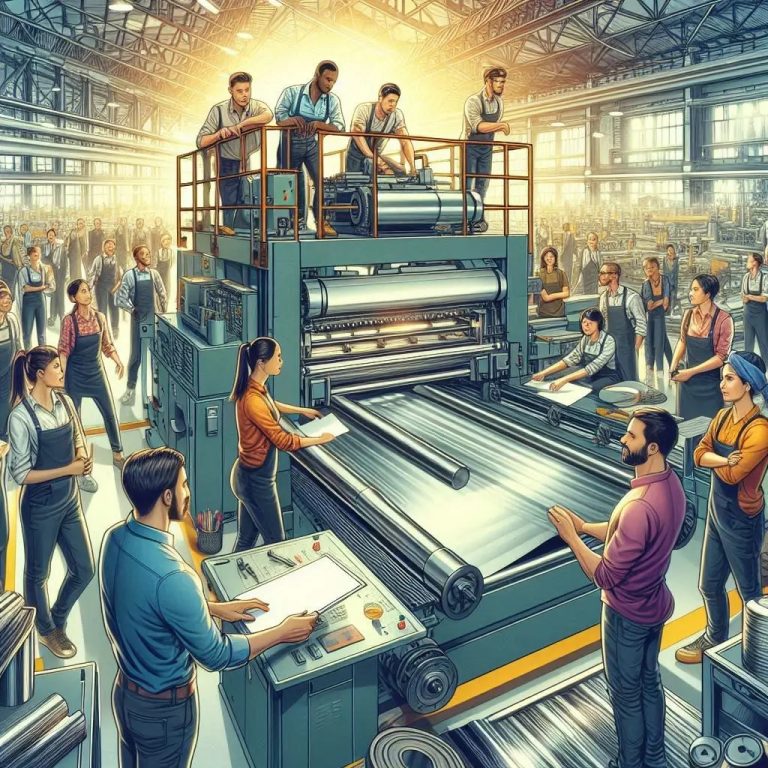
Automatic plate rolling machines play a crucial role in fabrication workshops by enhancing precision, reducing manual labor, and ensuring consistent quality. Explore how automation is shaping the future of metal fabrication.
As today’s metal fabrication industry has a fast pace, automatic plate rolling machines are now central to obtaining accuracy, consistency and a high production rate. They are intended to roll and form metal plates into cylindrical, conical or curved shapes with a low amount of manual intervention. They play an important role in manufacturing items such as pressure vessels and silos, pipelines, wind towers and structural members from fabricating steel, while providing quality and efficiency in the process.
Advancing Precision and Efficiency
Automatic plate rolling machines leverage control systems based on CNC and PLC technology to automate the rolling process. This feature enables operators to establish rolling parameters beforehand such as plate thickness, diameter, and bending radius. Automating these processes ensures uniformity of results and controlled rolling pressure; the weight of the production runs provides consistency over time. Digital readouts, servo motors, and hydraulic systems also assist with accuracy and reduce the opportunity for material deformation and human error.
Key Features and Design Advantages
Modern automated plate rolling equipment embodies the latest developments to serve the needs of today’s demanding fabrication market. Hydraulic drive systems enable fully automated plates to be smoothly and effectively rolled, even with thick plate steel. Precision roundness can be achieved with CNC pre-bending, which allows for the removal of flat edge conditions, while automatic alignment and overload protection systems provide operator safety and protect the hydraulic system against mechanical overload. New energy-efficient drive systems also minimize operating costs without a reduction in performance. Ultimately, these features improve productivity, provide consistent finishing quality, extend machine life, and lower maintenance requirements making plate rolling machines vital in today’s metal working shops.
Applications Across Multiple Industries
An automatic plate rolling machine is widely used in many different industrial sectors because of their precision and versatility. The oil and gas sector utilizes plate rolling machines to fabricate pressure vessels, pipelines, and storage tanks. In the shipbuilding and marine industry, automatic plate rollers are commonly used to form hull sections, boilers, and other curved metal components. In the construction and infrastructure sectors, rolling machines are important for the fabrication of silos, arches, and structural frames. In power generation, they are utilized to manufacture wind tower sections and heat exchangers. With their ability to process plates in various configurations, including materials and thicknesses, automatic plate rolling machines are regarded as a valuable machine in any modern fabrication shop.
Benefits for Modern Fabrication Workshops
The use of automatic plate rolling machines provides several real benefits to efficiencies in the workshop and increased productivity. By automating many of the more complicated rolling operations, these machines also minimize the manual labour component and reduce operator fatigue for smoother and more even operations. Their programmed rolling sequences, combined with digital engine monitoring and roll setting systems, result in superior accuracy and repeatability – which is ideal for the larger manufacture fabrication projects. Furthermore, with less downtime and quicker production cycles to meet deadlines, the finished products will be of the same quality assurance, but faster. With more smart safety features to reduce human error and mechanical overload, more safety and reliability can be achieved to an operator’s environment.
The Future of Plate Rolling Automation
As the smart manufacturing and Industry 4.0 fields continue to develop and expand, automatic plate rolling machines are evolving into intelligent, connected systems, thereby improving efficiency and reliability. New models of plate rolling machines will soon have monitoring functions to keep tabs on equipment performance usage, predictive maintenance, and data-driven performance and process efficiency enhancements that allow operators to monitor operations in real time to improve the reliability of the machine and eliminate unscheduled downtime.
Conclusion
For contemporary fabrication workshops, automatic plate rolling machines are necessary. For the first time, automation, hydraulic control, and digital control systems have combined to change the metal forming landscape. Automatic plate rolling machines provide dependability, improved production times, and enhanced safety. With the growing demand from industry for higher precision and faster delivery, automatic plate rolling machines will continue to evolve the world of metal fabrication.


