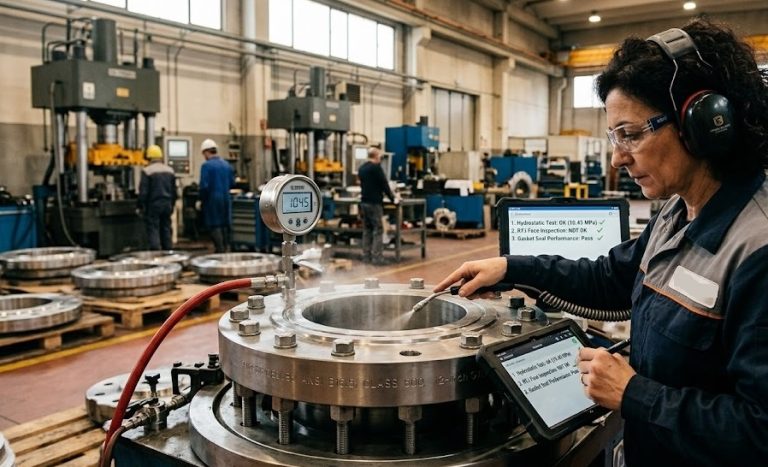
It was an unforgettable reminder to me when I received the late-night call from a commissioning site of a petrochemical plant in 2018. It was around 2:00 AM, very cold outside, the voice of a project manager on the line was so desperate that he was almost breaking down. At that time, they were conducting a high-pressure steam line test, and a seepage problem just happened at one of the joints which was critical. Not a big explosion thankfully but the family of a little, ominous hiss that means all things that shut down we really have to be done immediately.
We discovered that the fault was due to a poor quality item that was totally good on paper. The purchasing team had saved a few thousands rupees but decided to go for a cheaper, cast alternative from an unverified local supplier without checking the Forged Flanges Manufacturers who are very experienced in the strain of high-pressure environments. That minor “cost-saving” decision ultimately cost the company three weeks of downtime, hundreds of man-hours in remedial welding, and a massive hit to their project timeline.
When you design or maintain industrial piping systems, whether it is an oil refinery in Jamnagar or a water treatment plant in Germany, a flange is never just a piece of metal with holes in it. It is the literal backbone of your pressure containment strategy. So, let’s explore how the right manufacturing processes, material sciences, and quality standards distinguish a dependable component from a disastrous failure waiting to happen.
The Strategic Foundation: Why Forging Trumps Casting Every Single Time
It is essential to understand the basic metallurgy before even going through the technical details or asking for quotations. Unfortunately, I’ve come across a number of purchasing managers who consider flanges as common goods, believe that a cast flange can do the same task as a forged one if the dimensions match. It simply doesn’t work like that.
Grain Flow and Microstructure Explained
Out of heat comes liquid metal, tipped into a shaped cavity. As things slow down and temperatures drop, crystals grow every which way. Hidden flaws appear – tiny gaps filled with trapped gas, known among experts as porosity. These voids sit buried, unseen at first glance. When stress hits around 150 bars, the gaps link up, forming invisible highways for fluid to escape.
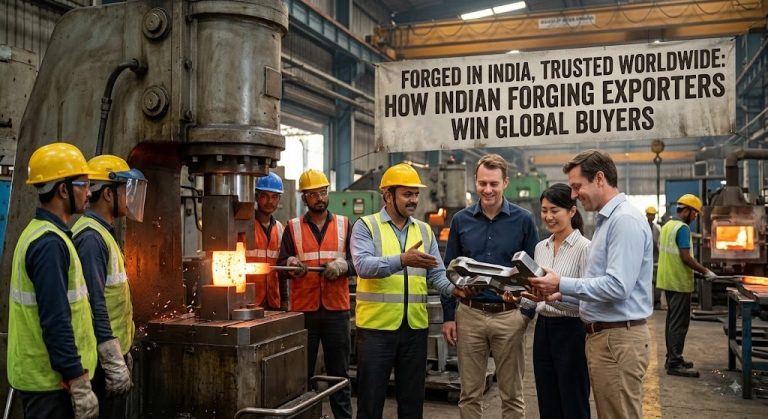
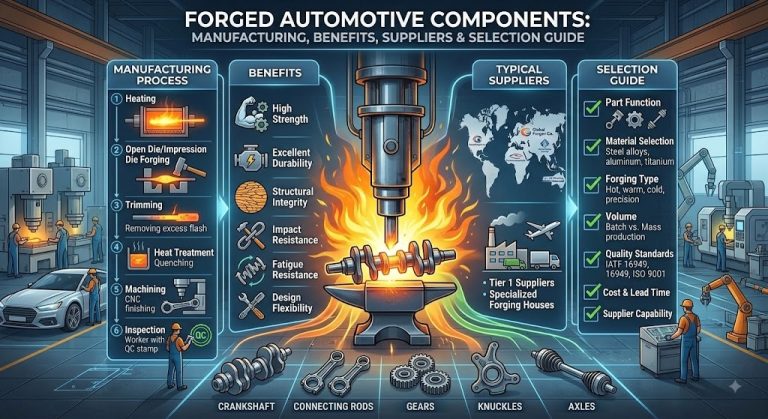
Metal forging is a completely different process. The metal is heated to the point that it is still solid, then it is hammered, pressed, or rolled under very high mechanical pressure. It works to change the internal grain structure of the steel so that the grain flow follows the shape of the flange.
- Directional Strength: The grain flow becomes continuous and moves along the shape of the component, completely surrounding the hub and the flange face.
- Structural Integrity: The high pressure completely eliminates the internal voids or gas pockets, resulting in a very dense and uniform microstructure.
- Impact Resistance: Forged parts have a much greater resistance to fatigue and a higher yield strength. This means they can withstand thermal shocks and pressure pulsations without cracking.
If your system is subjected to cyclic loading or sudden temperature changes which is pretty much a normal situation for any industrial process today then resorting to the services of reputable Forged Flanges Manufacturers is the only way to guarantee a good night’s sleep.
Navigating the Technical Pillars: Material Purity and Standards
This is where your engineering mindset should come into play as your next step. Whether it is a local or global sourcing, you cannot simply order “a stainless steel flange.” You really need to be extremely specific with your specification details if you do not want to end up with a very costly corrosion case.
The Importance of Pure Materials
Take carbon steel or stainless steel with too much sulfur or phosphorus – issues can pop up. When heated during welding, sulfur makes steel crack easily because it turns fragile. High carbon in certain stainless steels like 304 or 316 reacts under heat from joining processes. That reaction forms carbides along grain boundaries. These tiny changes weaken areas near the weld, opening doors to corrosion between grains.
Because of this, top makers use nothing but certified steel billets cleared of air pockets. Not once do they accept scrap or reused metal with unclear chemistry. Every batch undergoes close review so its elements match global benchmarks such as ASTM or ASME. These rules define quality across borders. Only when results align perfectly does production move forward.
The Reality of a Top Tier Factory?
Start by skipping the glossy pamphlets. A vendor stuck in 1980s factory thinking won’t adapt to now. Shop floor actions speak louder than promises printed on paper. Watch how workers handle materials Monday morning. Notice tools mounted near assembly points. Listen for quiet corrections between team members during shift change. That daily rhythm reveals more than any executive summary ever could.
Precision Machining and Surface Finish
After forging, the flange is machined to the final dimensions. This is perhaps the most critical point of the entire manufacture as precision is required down to the micrometer. The flange face (the surface that presses the gasket) is finished very carefully to meet the requirements of the particular use.
A bumpy ring around certain flanges often has tiny ridges carved in a swirl pattern – think 125 to 250 micro-inches of texture. Those little lines dig slightly into the soft sealing layer once fasteners pull everything together, forming a grip that holds against high internal force. If the tool shaping this area wobbles due to bad calibration, peaks and valleys turn uneven; even cranking down every nut won’t stop seepage through flawed terrain.
In House Testing Trust But Verify
Every now and then, one wonders whether chosen forged flanges actually test every single batch themselves. Instead, some might only hand over scattered samples to external labs twice a year. The stronger players push further – building up their internal inspection strength over time. Some of their labs hold approval by organizations like NABL – short for National Accreditation Board for Testing and Calibration Laboratories.
Here are a few common testing methods:
- Fast-moving sound waves pass through a forged flange, exposing hidden cracks or splits. Deep inside the metal, these vibrations find what eyes cannot see. When a wave returns in an uneven way, it signals a break beneath. The presence of laminations alters the pattern, giving away their location. Sound waves move through the material, revealing hidden flaws. By measuring how long reflections take, problems inside show up. The full depth is tested, never needing a single cut.
- Cracks hiding near tight spots – say, where bolts meet metal – can show up through magnetic fields tugging at tiny particles. Sometimes liquid dye slips into splits too small for eyes to catch, especially around hubs. One method uses magnetism; another relies on colored fluid soaking in slowly. Hidden breaks emerge when forces or stains reveal what looks smooth at first glance.
- Out comes a small device shooting invisible rays – within seconds it reads what metals make up the material. Before anything ships, each piece gets this check so mistakes stay caught early. Think of a flange labeled F316: its defense against tiny corrosion spots hinges on just enough molybdenum inside. That detail? Confirmed fast, right there in hand.
The Price vs. Value Paradox in the Indian Industrial Market
To begin with an honest, transparent talk about the specific dynamics of the Indian procurement landscape is a market of extremes. On one hand, India hosts some of the most refined, globally recognized manufacturing plants that supply components of the highest specifications to NASA, Saudi Aramco, and European offshore rigs. On the other hand, there is this huge unorganized sector functioning in cramped industrial clusters, offering deals that look unbelievably attractive on the paper.
For sure, you will come across offers that are at least 20% and perhaps even 30% lower than the market average. It is very tempting, trust me, I understand how cruel procurement KPIs can be when top management insists on cost reductions. However, you really need to think: where exactly are these savings coming from?
You see, steel manufacturing economics are quite inflexible. Iron ore, nickel, chromium, and energy prices are globally quoted commodities. If a supplier is selling at a rate which is substantially lower than that of the reputed brands, most probably they are compromising one or more of material and process:
- Undersized Blanks: The voicing of a flange from a billet which is of lower size in order to save raw material weight, which results in a finished product that barely meets the minimum thickness tolerances allowed by ASME codes.
- Skipping Heat Treatment: Forgoing or hurrying through critical heat treatment processes like normalizing or solution annealing Without these processes metal will have locked-up internal stresses, leading to stress-corrosion cracking in the future.
- Forged-to-Shape Scrap: Using re-rolled steel scrap or uncertified logs that suffer from severe chemical segregation, which means that one side of the flange might conform while the other side is highly brittle.
If you go for the absolutely lowest price without checking structural integrity, you are not saving money. You are only transferring a small upfront saving to a large, time-bomb financial liability. The repercussions of a major flange leak shutdown, environmental fines, safety risks, and replacement can cost you a decade’s worth of procurement savings in one day, after all.
How Sourcing Experts Evaluate Candidates
What if your project faces surprises no one saw coming? A clear roadmap, built piece by piece, cuts through polished promises to show how things really run.
Step 1: Enforce Full Certification Transparency
Start strong with full certification – it’s key. Whether shipping abroad or selling nearby, demand Material Test Reports that match EN 10204 standards, specifically Type 3.1 or 3.2. The 3.1 version? That’s when the maker’s own inspector signs off on lab checks of makeup and strength. Then there’s 3.2 – this one brings in outside experts such as Lloyd’s Register, TÜV, or Bureau Veritas to take part in verifying tests.
Step 2: Evaluate Supply Chain Resilience and Scale
Imagine needing something right now – will they actually deliver it then? A tiny shop might quote an amazing price for ten items, yet struggle when demand jumps to five hundred big flanges overnight. Pressure builds fast; can they handle moving parts across the chain without breaking down? Check how much they make each month, whether metal stock sits ready, or waits on order. Long-term deals with giants like SAIL, JSW, or Tata hint at stability – spot buys suggest shifting ground beneath their feet.
Step 3: Check Required Industry Certifications
Engineering demands vary wildly across fields. Some sectors push limits others never touch. Complexity hits differently depending on where you look. Each industry has its own version of extreme. What feels normal in one place seems insane in another. Rules grow stranger the deeper you go into certain areas. Standards shift like sand under pressure. Nothing stays consistent from field to field. The bar jumps without warning. Expectations twist beyond recognition.
Need trusted materials for precise fittings? Explore the certified material groups right here.
Should your work involve nuclear power, diving into hydrogen processing, or pushing into ultra-deepwater oil zones, forget about choosing a vendor focused on water pipeline flanges. That kind of maker just won’t fit where you’re headed.
Start by checking if a company has EIL approval – this matters when working on big industrial projects. Sometimes Engineers India Limited status makes the difference. Approval from HPCL, BPCL, or IOCL opens doors to national supply chains. Being listed as their vendor isn’t automatic – it takes time. For exports, API 6A certification is often needed for gear used at drilling sites. Wellhead parts must meet that standard. Another key rule in Europe? The Pressure Equipment Directive, coded 2014/68/EU. Without it, selling certain hardware there gets blocked.
The Long Game of Sustainable Engineering Partnerships
Starting out, building industrial infrastructure isn’t about isolated buys – it kicks off a bond built on reliability and how well tech fits together. Speed rules now in heavy industry. As green hydrogen surges forward, high-stakes heat plants grow more complex, and massive pipelines stretch across nations, the pressure on pipe networks keeps climbing.
Most of today’s forged flanges makers aren’t just suppliers – they stick around through every stage, sometimes jumping into early sketches alongside engineers. Picture them stepping in during blueprints, suggesting tighter specs where needed. One firm may propose sharper thickness ratios while another pushes new alloys such as Duplex or similar tougher blends. Custom sealing faces? They’ll shape those too, fitting odd joints others avoid. Long talks about performance under pressure often lead directly into mold adjustments. Decisions once thought fixed now shift based on real feedback mid-process.
Conclusion
Sounds a bit exaggerated, right? But the safety, profitability, and simply existence of your industrial asset all go through the joints you come up with today. Don’t let a marginal price difference or hurried procurement cycle entice you to compromise the structural integrity of your pressure systems. Rigidly adhere to verifiable metallurgical standards, demand absolute testing transparency, and partner with those manufacturers who appreciate faultless engineering execution to the same extent as you.
Come on, do your technical audits, your piping network will be strong enough to withstand both time and pressure.