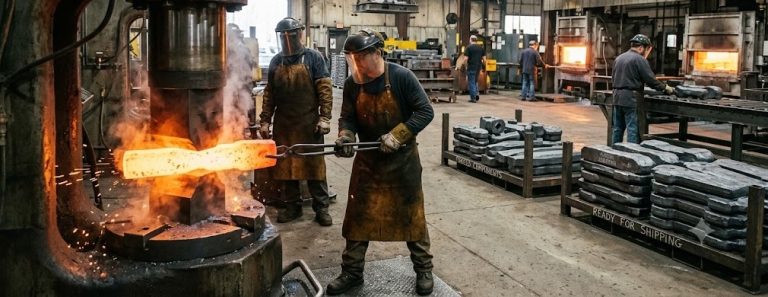
Walk into any large mechanical workshop and look around carefully. Shafts stacked in racks, flanges waiting near machining stations, couplings placed in wooden crates ready for dispatch. Most of those parts share a similar origin. They were shaped under heavy pressure while the metal was hot. That is forging.
The manufacturing sector in India depends on that process more than many people realize. From vehicle assemblies to railway systems and drilling equipment, forged parts appear everywhere. The facilities responsible for producing those parts are commonly referred to as forging foundries India.
These operations form a quiet but essential layer of industrial production. They rarely receive the same public attention as automobile manufacturers or infrastructure companies. Still, their work feeds directly into those industries. Without the steady output coming from forging foundries India, many mechanical systems simply would not have the components required to function safely under stress.
Understanding the types of products created by forging foundries India gives a clearer picture of how deeply this segment connects with the broader manufacturing environment.
Automotive Components and Forged Metal Supply
The automotive sector is often the first place where forged parts come into discussion. Engines and drivetrains experience repeated mechanical forces every time a vehicle moves. Metal components inside these systems must tolerate rotation, vibration, heat, and torque all at once.
This is where forging foundries India play a practical role.
Consider the crankshaft. It converts the linear motion of pistons into rotational motion that ultimately drives the wheels. During engine operation, that component handles thousands of cycles every minute. Forged crankshafts are widely used because the forging process improves internal metal structure and strength.
Connecting rods represent another typical example. These rods link pistons to the crankshaft and operate under alternating compression and tension forces. Manufacturers prefer forged versions since they tend to hold structural stability under repeated stress.
Then there are axle shafts. Vehicles rely on these shafts to transmit torque from the drivetrain to the wheels. If the shaft fails, the vehicle cannot move. Because of that responsibility, forged steel shafts remain common in automotive assemblies supplied through forging foundries India.
In short, the automotive supply chain consumes a significant portion of the output produced by forging foundries India.
Agricultural Equipment and Field Machinery
Agriculture might not appear as mechanically demanding as automotive manufacturing at first glance. But farm machinery operates in conditions that test metal parts continuously.
Tractors travel across uneven terrain. Harvesting machines pull heavy loads through soil resistance. Gear systems inside these machines must stay operational throughout long work cycles during planting and harvesting seasons.
To meet these conditions, many agricultural equipment manufacturers rely on forged metal parts. forging foundries India supply linkage arms, shaft components, coupling parts, and gear blanks used in tractors and other farm equipment.
These components do not simply handle motion. They also absorb impact from rough ground conditions. Dirt, moisture, and temperature variations create additional stress on the materials.
Because forged components generally offer strong structural properties, they continue to appear frequently in agricultural machinery supplied by forging foundries India.
Construction and Infrastructure Equipment
Construction machines face some of the harshest working environments in the industrial world. Excavators dig through rock and soil. Loaders carry heavy material repeatedly. Drilling rigs apply strong forces into the ground during foundation work.
Under these conditions, structural reliability becomes critical.
forging foundries India manufacture components used in pivot joints, mounting points, and load-bearing connectors for construction equipment. Pins, couplings, brackets, and hub structures are commonly forged before they are machined and assembled into larger systems.
These parts must tolerate shock loading. When an excavator bucket strikes hard rock, the stress transfers through multiple mechanical joints. Forged components in those joints help distribute the force more effectively.
As infrastructure projects expand across roads, bridges, and urban development, the demand for components produced by forging foundries India tends to increase alongside construction activity.
Railway Transport Components
Rail transport systems involve large mechanical assemblies operating continuously over long distances. Trains carry heavy loads while maintaining stability on steel tracks. The components supporting these systems must be extremely reliable.
For this reason, several railway parts are produced through forging.
forging foundries India manufacture couplings, brackets, suspension fittings, and axle components used in rail systems. These parts manage both static weight and dynamic forces created during acceleration and braking.
A train does not operate like a small machine where maintenance can happen frequently. Railway components must endure long service intervals. Forged parts therefore remain a practical choice because they provide a strong combination of toughness and durability.
The railway sector continues to represent another industrial area supported by the output of forging foundries India.
Oil and Gas Sector Requirements
Equipment used in the oil and gas industry operates in environments where pressure and safety considerations become extremely important.
Pipelines carry fluids across long distances. Drilling systems apply mechanical force deep into the ground. Processing plants rely on sealed connections to prevent leakage.
To support these systems, forging foundries India produce parts such as flanges, valve bodies, connectors, and pipeline fittings.
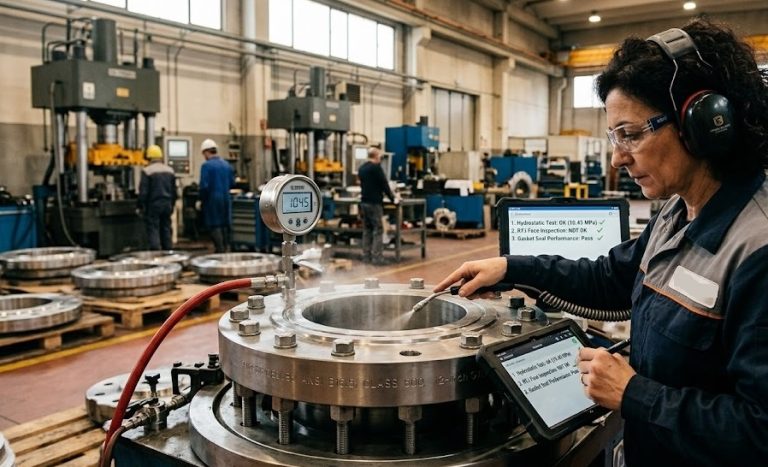
These components must pass inspection procedures before entering service. Structural integrity matters greatly because even a minor defect could compromise a high-pressure system.
The ability to produce durable metal components allows forging foundries India to contribute to supply chains connected with drilling equipment and pipeline infrastructure.
Power Generation and Energy Equipment
Power plants contain large rotating equipment that must function continuously. Turbines spin at high speeds while shafts transmit mechanical energy into generators.
Parts used in these machines often originate from forging foundries India.
Forged turbine shafts, flange rings, and structural connectors appear in energy generation equipment across different power technologies. These parts must maintain dimensional stability while operating under temperature changes and mechanical stress.
Maintenance cycles inside power plants also require replacement components from time to time. Forging facilities therefore remain connected with long-term energy infrastructure through the production of these parts.
Industrial Machinery and Factory Equipment
Factories rely on machines that operate daily for extended hours. Conveyors move materials, compressors circulate air or gas, and mechanical presses shape products used in manufacturing.
Many of these machines incorporate forged parts in their internal assemblies.
forging foundries India supply shaft components, couplings, gear blanks, and structural connectors used in industrial machinery. These items typically undergo machining after forging so that precise dimensions can be achieved.
Durability matters here as well. Factory machines often run for multiple shifts each day, meaning the internal components must tolerate repeated mechanical loads.
Because of that requirement, forged metal parts continue to appear regularly in machinery components supplied by forging foundries India.
Export Activity and Global Supply Chains
In addition to supporting domestic manufacturing, some output from forging foundries India reaches international markets.
Exported components include automotive forgings, pipeline connectors, and industrial machinery parts. These products travel through global supply chains where manufacturers assemble equipment for various industries.
Facilities involved in export production often follow internationally recognized quality standards and inspection practices. Material traceability, dimensional checks, and testing procedures help ensure the parts meet required specifications.
This export capability allows forging foundries India to participate in manufacturing networks that extend well beyond regional markets.
Closing Observations
Forging is not always in the limelight, especially when compared to product manufacturing. The mechanical systems used in transportation, infrastructural development, and industries all depend on forged metal components.
Through heating, shaping, and finishing, forging foundries India are able to transform simple metal billets into structural components that are able to bear considerable mechanical loads.
From engines, railway systems, drilling rigs, to machinery, these forged metal components are working behind the scenes to keep factories running. The industrial output generated by forging foundries India is therefore still closely associated with the development of manufacturing industries. Although they are working behind the scenes, their contribution to modern mechanical systems cannot be overstated.