In the high-stakes world of industrial procurement, a valve is often the component that separates a smoothly operating installation from a disastrous malfunction. Valves in essential infrastructures such as refineries, power plants, and municipal water systems, are not simple pieces of hardware, but rather, the ultimate enforcers of process integrity. When pressure testing fails or a leak develops in a pipeline, the inevitable downtime and lost revenue generally far exceed that initial cost of the component.
This thorough report delves into the present state of the Indian industrial valve market. If you are in the process of evaluating a forging company in rajkot for high-pressure blanks or choosing a manufacturer for a large-scale utility project, you must understand the technical aspects and procurement strategies to run operations successfully.
Transforming Indian Valve Manufacturing: An International Reorientation
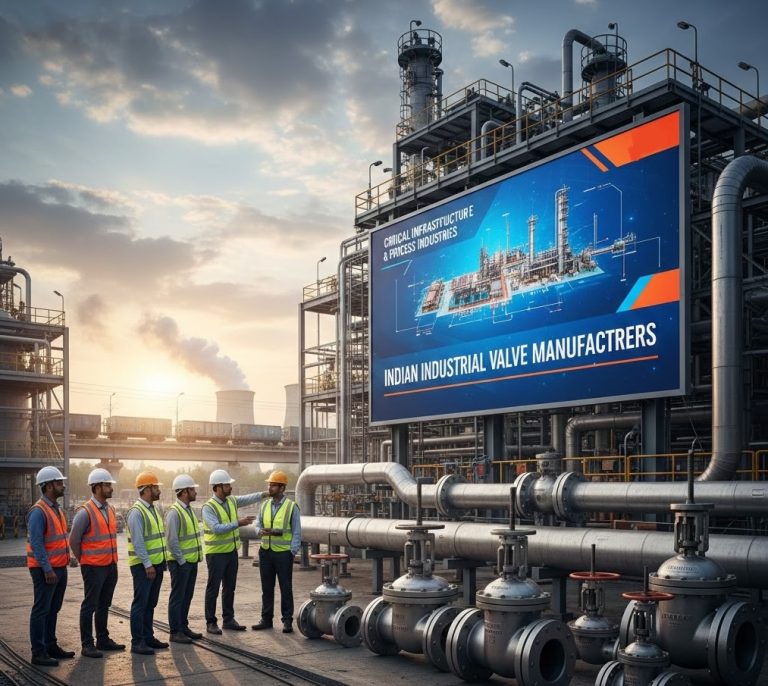
India’s industrial valve market has changed dramatically over the years. The sector, which used to be mainly focused on production of basic water utility components for the domestic market, is now recognized as a major global player. The forecast figures indicate that the market will expand at almost a steady rate of 8% per year until 2030, backed by ambitious projects such as the Gati Shakti National Master Plan.
Indian companies were just “covering the gap” before, but now they have become direct competitors to the well-known Western brands. This is a result of a mixture of government-led “Make in India” programs plus a major progress in home-grown engineering skills.
Why is India the Preferred Location for Critical Infrastructure?
- Infrastructure Momentum: The large-scale projects like the Jal Jeevan Mission, expansion of City Gas Distribution (CGD) networks have given the local manufacturers an enormous opportunity to grow.
- Technological Integration: Industry 4.0 is clearly the direction that has been adopted. Nearly 30% of the industrial plants newly built in India this year feature some degree of smart automation or IoT-enabled monitoring.
- The Quality Equilibrium: India has managed to distinguish itself by offering API-certified quality at a cost that eliminates the “legacy brand” premiums one generally finds in Europe or North America.
Key Points for Sourcing: The “Forging Company in Rajkot” Ecosystem
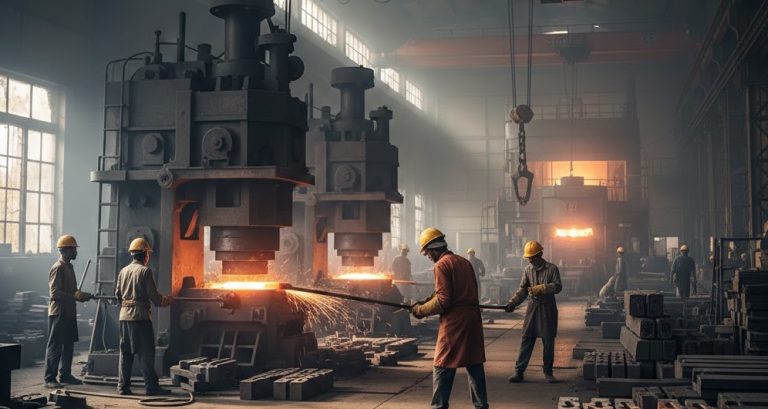
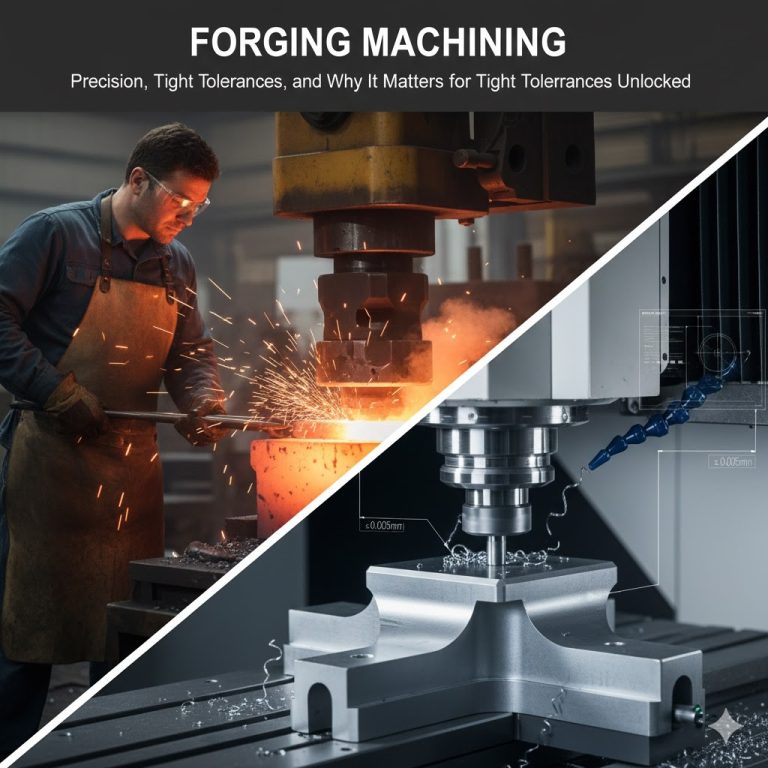
To procurement professionals, Rajkot is synonymous with the center of the forging industry in India. It is a locality where conventional metalworking skills have been combined with modern CNC machining and automated forging lines. Searching for a forging company in rajkot most likely means that the buyer is interested in forged bodies of the highest grade that can withstand extremely high pressures, which are used in valve applications.
However, since the Rajkot cluster is so diverse, one has to be very careful when deciding which part of the market they want to approach. On the one hand, there is an abundance of small shops and, on the other, there are highly automated, export-oriented plants.
Important Technical Point: Hammer capacity is just one factor when assessing a forging company in rajkot. What really matters is whether or not they have a heat treatment plant on the premises. The strength of a valve body is based mostly on its grain structure; if the cooling or tempering cycles are not carried out properly, there will be internal stresses leading to early failure under pressure.
Critical Infrastructure: Understanding the Requirements of Each Sector
It is safe to say that, in process industries, the valve supplier is a risk management partner. Check out an outline of how the key industries are different in terms of their requirements:
1. Oil & Gas: The High-Pressure Standard
This field requires no less than strict adherence to international norms. In addition to that, forged steel ball valves should be capable of sour service (H2S rich environments) which is highly corrosive. Procurement needs to be very selective in this matter and must quote API 6D for pipeline valves and API 6A for wellhead equipment. Metal-to-metal seating and fire-safe designs are the key here.
2. Water and Wastewater: Durability and Volume
The UK government-led mission to Jal Jeevan provides the driving force behind the use of sluice valves and butterfly valves with resilient seats. The tricky part of this sector is not only the pressure, but also the resistance to various environmental factors. A lot of these valves are underground or at uninhabited sites, so making sure there is no leakage at all and applying to them high-grade epoxy coatings are essential requirements.
3. Power Generation: Thermal and Pressure Extremes
Thermal and nuclear power plants have one thing in common in that galvanised valves have to endure extremely high steam temperatures. Indian Boiler Regulations (IBR) certification signifies the absolute standard in India. Utilizing a valve that is not IBR-certified in steam service exposes one to great risks both legally and in terms of safety.
Assessing an Industrial Valve Manufacturer: A Tactical Checklist
Low-cost bidding is, unfortunately, one of the traps in industrial procurement. A 20% discount in purchasing can be wiped off right in the first hour of unexpected stoppage caused by a broken valve stem or a faulty seal if the situation arises. The following vetting hierarchy will help maintain reliability in the long term:
- Going Beyond Basic Certification
- Meeting ISO 9001 isn’t enough on its own. When it comes to vital systems, more is expected. Requirements go beyond basic standards when failure isn’t an option. Safety, precision, consistency – these matter most under pressure. Relying solely on certification won’t carry weight here. Extra safeguards become necessary where stakes rise. Performance must hold even when conditions shift unexpectedly. Trust builds through proven results, not just paperwork
- Built for oil and gas work, API 6D, 600, and 602 standards fit right into petrochemical uses. Though narrow in scope, they handle tough conditions where reliability matters most.
- Equipment heading overseas or handling high pressure needs CE/PED rules applied. Safety matters most when force runs strong inside machines crossing borders.
- A valve’s safety rating matters when systems must stop fast. Because shutdowns rely on automation, a set standard keeps things under control. When danger appears, these parts need to respond without delay. So performance levels exist to match risk with reliability.
- Fugitive emissions get measured under ISO 15848 – this global standard sets how testing works. Not every rule matches its precision, yet many rely on it quietly. Where leaks matter most, this one shapes decisions behind closed doors.
Step 2: Compulsory Material Traceability
The manufacturer must practice a full traceability of materials by always providing a Material Test Certificate (MTC). If the valve body cannot be connected down to the specific forging company in Rajkot that made the blank by way of chemical composition and heat number, then you should not accept that particular piece of equipment.
Step 3: Protocols
Thorough checks beyond looking at the surface are the norm for a dependable producer. They should have:
- Hydrostatic and Pneumatic Testing: For the purpose of shell and seat leak tightness.
- Non-Destructive Testing (NDT): These methods being Radiography, Magnetic Particle and Ultrasonic testing are to identify hidden defects.
- Positive Material Identification (PMI): A spectrometer (XRF) is used to determine alloy composition right on the shop floor.
Looking at the Total Cost of Ownership (TCO) Against the Price Initially Paid
One of the most overlooked things that arise from buying cheap is the “hidden” cost. There are plenty of other factors such as:
- Maintaining Frequency: Valves that have been designed with precise engineering feature packing and seals of a higher quality which drastically increases the mean time between failure (MTBF).
- Operational Efficiency: Through the pressure drop that they cause, poorly designed valves compel pumps and compressors to use even more energy in order to maintain the flow rate.
- Risk from Regulation: Environmental penalties due to fugitive emissions can be so huge that investing in low-emission valves is a wise financial move.
Future Developments in the Indian Valve Industry
Digitization and focusing on the environment are the two main themes along which the industry is evolving today.
The Merger of “Smart” Valves
Out there in factories, old-style valves just sit and do their job – now they’re waking up. Fitted with tiny sensors, these updated parts keep an eye on pressure, how hot things get, and how often they open and close – all while everything runs. Since data flows nonstop, teams spot weak spots before cracks ever show. Trouble doesn’t sneak up so easily when warnings pop up weeks ahead. That early shout gives time to fix what’s fraying, stopping big messes before they start.
Focus on sustainability and reducing fugitive emissions
Tightening worldwide standards push environmental demands higher. Right now, leading makers in India work hard to design valves that reduce leaks – those small escapes from seals adding up in the atmosphere. Should a factory in Rajkot want access to international energy sectors, crafting these cleaner valves isn’t optional anymore. Staying ahead means meeting these expectations just to remain part of the race.
A Practical Guide for Procurement Specialists
By following these steps, industrial valve sourcing can be optimized:
Start by naming exactly what you need. Skip general terms when describing materials – state the precise grade. Pressure class must appear clearly, never implied. Every request gets a mark only if API, IBR, or SIL proof is included. Clarity shows up best when nothing’s left to guess.
Start by checking every step in the supply chain. Show who supplies the suppliers too. When a maker buys raw metal from a known forge shop in Rajkot, things tend to go smoother. Fewer flaws pop up down the line because quality starts early.
A document should show how each step is checked during making, starting from raw metal shaping right through to paint application. Look for one that walks through quality checks at every phase of building the part.
A mismatch hides where parts meet. When automated, think of the valve and drive as one piece. A strong valve paired with a weak drive brings shaky performance.
In Conclusion Validation Is The Cornerstone Of Confidence
A big chance hides in India’s industrial valve scene – good gear without high costs. Still, because so much is on offer, buyers need sharp attention backed by solid numbers. Trace where materials come from first. Push hard for deep testing routines. Know exactly what conditions the setup will face. Safety and smooth running depend on these steps.
A solid reputation, proven through checks and tests, holds weight whether you work with giant factories or one small forge in Rajkot. At high-stakes moments in heavy industry, timing matters most – only a valve that acts precisely when pressure hits its limit will do. Those focused on keeping systems safe over years choose suppliers who meet these demands without exception.