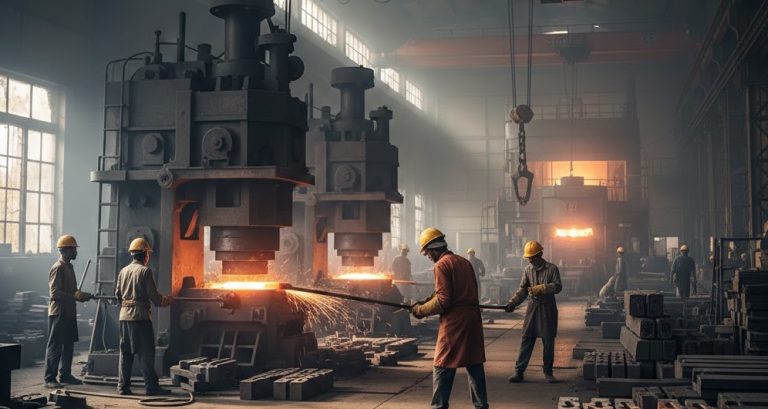
It’s interesting how the industrial landscape shifts when real on-ground challenges meet practical solutions. Walk into any fabrication unit today—steel workshops, enclosure makers, panel builders, farm-equipment manufacturers—and the conversations almost always circle back to the same thing: machines that don’t just work, but machines that keep working. Machines that fit the daily rhythm of Indian shops instead of forcing teams to adjust around complex foreign designs. This is where choosing a hydraulic shearing machine manufacturer India quietly becomes the smarter, more grounded decision for businesses that deal with sheet-metal cutting every single day.
The difference doesn’t show up in sales brochures; it shows up on the factory floor. When a machine is easy to calibrate, when a blade arrives quickly, when maintenance doesn’t require a global service ticket—those moments matter more than any catalog specification. Indian manufacturers have grown into that practical sweet spot, where engineering, affordability, and real-world adaptability meet.
Machines That Understand the Indian Way of Working
There’s a pattern seen across many fabrication plants: materials vary batch to batch, schedules shift without warning, and machines get pushed far beyond standard loads during peak demand. Imported machines—beautifully built but often rigid—don’t always sync with such realities. Indian manufacturers, on the other hand, tend to design with the country’s everyday industrial routine in mind.
Take something as simple as sheet inconsistencies. Hot-rolled plates, cold-rolled sheets, mild steel, aluminum—each behaves slightly differently while cutting. Many Indian shearing machines handle this mix gracefully because their hydraulic systems and blade geometry are tuned for it. It isn’t just engineering; it’s experience collected over years of watching how Indian workshops actually operate.
And the fact that these machines are built to tolerate long hours, summer heat, voltage fluctuations, and occasional operator improvisations also says a lot. They’re made for tough floors, not glossy showrooms.
Cost Advantage That Isn’t Just About Price Tags
It’s always tempting to compare machines based on initial cost alone, but longevity tells the real story. The irony is: Indian machines aren’t “cheap” machines—they’re practical ones. They cost less because supply chains are shorter, components are local, and manufacturers don’t waste resources on features that look fancy but barely matter.
What stands out is the predictability of ownership. No long waits for a specialist to fly down. No hunting for parts that only one supplier in Europe stocks. No conversions, no import duties, no international lead times. A breakdown doesn’t feel like an emergency; it’s simply an afternoon job with a local technician who probably knows that exact model inside out.
Over time, these everyday conveniences quietly translate into lower operational costs and steadier productivity.
Delivery That Aligns with Real Project Timelines
Anyone who has ever waited for an imported machine knows how unpredictable that journey can be. Shipping delays, port congestion, customs loops—everything seems innocent until a production schedule is disrupted because one critical machine hasn’t arrived.
Whereas with Indian manufacturers, the timeline is much more aligned with how projects actually run here. Lead times are shorter, communication is faster, and customization doesn’t take a lifetime. It feels less like a transaction and more like a collaboration, where the manufacturer understands how urgent a delivery can be for a fabrication unit preparing for a new contract.
That immediacy isn’t a small benefit—it often saves months of project slippage.
Service Support That Doesn’t Disappear After the Sale
Machines in India work hard. Really hard. At some point, every shearing machine needs blade regrinding, hydraulic tuning, electrical adjustments, or back-gauge alignment. What makes domestic sourcing worthwhile is how accessible support becomes.
When a local team can reach the facility without air-travel logistics, when spare parts arrive the same week, when the manufacturer answers calls without pushing everything through a formal ticketing system—that experience can’t be overstated.
This is where a hydraulic shearing machine manufacturer India usually excels. The service feels personal and familiar. Teams understand the urgency because they understand how Indian industries function: when a machine stops, the entire workflow stalls.
Customizations That Reflect Industrial Realities
If there’s one trait that sets Indian manufacturers apart, it’s their willingness to tailor machines. Not superficial changes—actual performance-related tweaks.
Different industries need different setups. HVAC fabricators usually want quick cutting cycles for thin sheets. Heavy engineering units require higher tonnage and deeper throat design. Electrical panel manufacturers need precise back-gauge accuracy. Instead of forcing everyone into the same spec sheet, Indian builders adapt machines to match the task.
Changes to rake angle, back-gauge travel, stroke control, hydraulic flow, blade steel composition—these are not optional upgrades but deliberate adjustments that help a machine feel “just right” for its intended purpose.
This flexibility is something global brands rarely offer without steep costs and long development times.
Built to Survive Long Hours Without Drama
It doesn’t take long to notice that many Indian fabrication workshops run almost non-stop. Two shifts. Sometimes three. And downtime is never kind. Indian shearing machines, especially from established manufacturers, tend to be overbuilt in the best possible way—thicker frames, heavier hydraulic cylinders, simpler electrical systems, and cutting blades that can survive demanding workloads.
This ruggedness isn’t overengineering; it’s survival engineering. A machine that handles thick MS plates in monsoon humidity and keeps running through power fluctuations is more valuable than one with a fancy European display panel but low tolerance for rough usage.
That quiet resilience often becomes the reason buyers return to the same manufacturers again and again.
Technology That Has Matured Beyond Expectations
A few years back, Indian shearing machines stuck to being mostly manual or semi-automatic. Nowadays the picture is a whole lot different. A bunch of local manufacturers have started offering up NC and CNC machinery, digital displays, programmable back gauges, more efficient hydraulics and way better integration with fabrication lines – you name it.
What’s really changed here is the way people think about it. Indian builders aren’t just copying foreign designs; they’re taking what they’ve learned and applying it to make their own improvements. Some are even exporting their machines to the Middle East, South East Asia and Africa – talking about a change of pace! This means that Indian engineering is no longer playing catch-up, it’s out in front.
For local industries, that means they get access to top-of-the-line tech without the hefty price tag or complicated service support.
A Long-Term Relationship Instead of a One-Time Purchase
Getting a shearing machine from Indian manufacturer usually ends up turning into a long-term partnership. Not because you’re locked into a contract, but because the whole support system – availability, how adaptable they are, how well they communicate and how much they’re there to help you out – all makes life a heck of a lot easier. When the machine becomes second nature, when the support team gets what you’re getting at without needing a 5-page explanation, and when you can just order an upgrade or new machine without jumping through hoops – that’s what starts to build a relationship beyond just one sale. And when reliability can make all the difference to the bottom line, then that kind of long-term partnership can be a real game-changer.
Final Thoughts
The strongest reasons to choose Indian manufacturers are rarely loud or flashy. They’re practical. They’re visible in everyday work. They show up in the quiet moments when a machine behaves exactly the way it should. They’re felt when a technician arrives quickly, when a blade fits perfectly, when procurement doesn’t become a two-month ordeal, and when the machine still runs steadily after years of use.
For industries that depend on consistent sheet-metal cutting, partnering with a hydraulic shearing machine manufacturer India is less about buying a machine and more about choosing predictability, proximity, and long-term stability—qualities that matter more than any glossy brochure ever admits.