

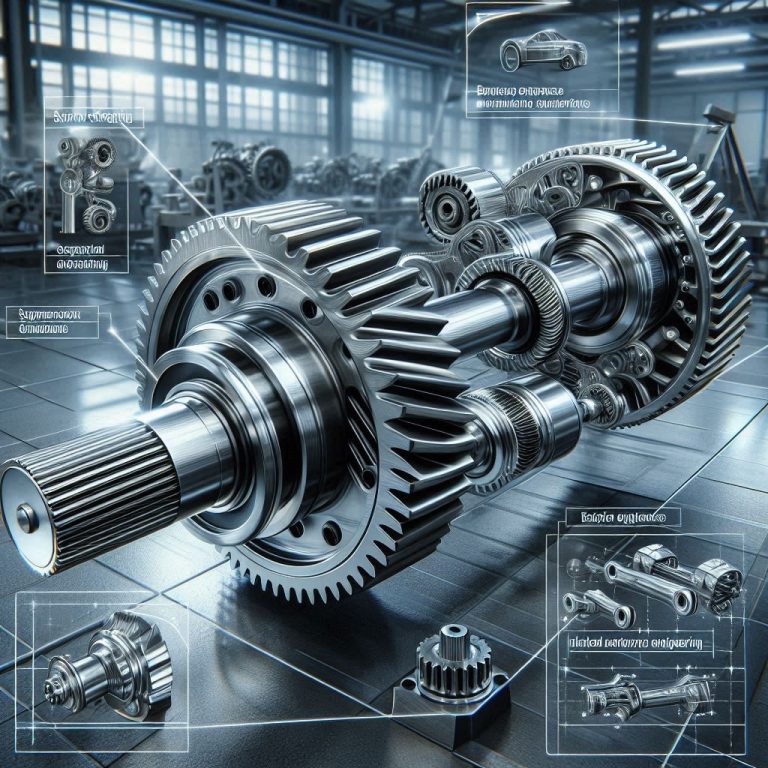
It is no easy feat selecting an automotive manufacturer for India. The market is a fierce competition, filled with technical jargons and quality contradictory claims, which can easily confuse the procurement teams. The reality is, the difference between a top notch Forged Automotive Component and a cheap “cost effective” alternative is often the same as that between smooth operations and a major disaster.
In the industrial world, the answer to the pressure of getting the jobs done on time is often picking a component based on initial savings. However, when such critical components as steering knuckles or engine parts give way under load, the losses in time and extra expenditure for exchanging the parts will be so high that they will altogether verge on the initial “value.” What is more, when it comes to the very framework of a vehicle, the most expensive error a company can make is choosing a substandard component.
The Strategic Ground: Why Forging Steals the Show
Before evaluating manufacturers, it is necessary to clarify the technical requirements at the granularity level. There is a popular myth that “metal is metal”; however, the metal forging method the metal is hammered or pressed into the desired shape while hot radically changes the metal’s internal structure for the better.
The Science Behind Greater Strength
Unlike casting, where tiny holes can form inside the material, forging shapes the metal so its inner structure follows the part’s outline. Because the grains stretch and bend along the contours, strength improves noticeably. The way particles line up through this process boosts toughness. Shaping under pressure avoids weak spots that often show up after cooling slowly. Internal consistency becomes far better when force replaces pouring. Each piece handles stress more evenly thanks to realigned fibers
- Built to handle heavy shocks, it takes serious force to make this stuff break. Energy gets soaked up easily, stopping cracks from spreading fast. When hit hard, the material gives a little instead of snapping right away.
- Fatigue resistance means the material holds up even after repeated stress. Though bent again and again, it refuses to give way. Each time pressure returns, the piece stays true. Even under constant load, its form remains unchanged. Over time, most materials weaken – not this one. Battered by endless cycles, it acts unbothered. Stress comes. Stress goes. The job stays done.
- Built solid throughout, without hidden gaps inside. That absence keeps every part strong, so nothing gives way unexpectedly.
Those who choose to act fast in ensuring they have a superior quality supply chain regularly perform better than those who refuse to act for reasons of hesitancy. Through a sound sourcing plan, it is absolutely necessary to ensure a gap in the Indian market between the quality of top notch and unorganized players that is well bridged with.
The ‘Non Negotiables’: Technical Specifications
Buying a Forged Automotive Component should be a matter of understanding what the part environment is, and what its role is, rather than simply looking at the part’s size.
1. Material Purity and Alloy Selection
How steel grade is chosen is of paramount importance. It makes no difference if the parts made of carbon steel are the ones that are supporting the structure while the engine parts that are subjected to high stress are made of specialized alloys, the issue of material purity should be the last one to be sacrificed. The use of high purity steel ensures that the component is less likely to overheat when there is friction, and that fatigue will not happen so suddenly and hence unexpectedly.
2. Precision and Automation
The latest in automotive manufacturing is heavily reliant on automation.
3. Heat Treatment and Testing
Heat treatment after the forging process should be very precise. Only that way will the hardness and strength that are needed be achieved thanks to the heat treatment method (e.g. quenching and tempering). Otherwise, a part might look fine, but at the same time, it might easily break down when subjected to normal working conditions.
Certifications: The Guarantee of Performance
In India, the certification is a vital third party promise of the quality of the product. It comes as a first filter to eliminate all the archaic and non compliant manufacturers from the list of potential partners.
- Out there among global standards, IATF 16949 sets the mark for auto industry quality systems. Anyone building vehicles without it? Not really on the radar.
- A stamp from India’s standards watchdog means someone checked how well a piece was made. Skip anything missing that little mark on it.
- Achieving ISO 9001:2015 means steady performance in managing quality. It shows systems work reliably over time, not just when checked. What matters is consistency – day after day, process after process. Standards stay met because procedures are followed without exception. Oversight isn’t occasional; it’s built into daily operations. Confidence comes from repeatable results, nothing left to chance.
These certifications are the ones that the manufacturers should be proud to display on their shopfronts. On the other hand, if they refuse to give the information about how they comply with the regulations, you should consider it a big red flag.
The Reality Check: Manufacturing and R&D Prowess
A partner that you can rely on has to show that he/she/it is capable of delivering a modern manufacturing facility and not just a workshop with some old fashioned equipment.
In House Testing Labs
First class manufacturers use top tier, NABL accredited laboratories to run batch tests. This can be:
- Inside breaks or faults? That method picks them up. Uses sound waves people cannot hear. Works deep within materials. Finds hidden issues without tearing things apart. A quiet pulse tells what eyes miss.
- Testing how tough the metal is by checking its resistance to stretching forces. A solid piece must stand up to pressure without giving way too soon. Strength here means it won’t bend easily when pulled apart. The test shows whether the material can handle stress over time. Results tell if the metal fits the job it’s meant for.
- How well a substance withstands fire and high temperatures reveals when it begins to break down. What happens under intense warmth shows its limits clearly. A material changes once heat crosses a certain point. When things get too hot, performance drops off. Resistance fades after hitting a threshold. The shift occurs gradually, then speeds up. At some stage, strength gives way.
Research and development
Future shifts in how cars are built push research forward. Those putting money into fresh ideas stay ready ahead of time. Lighter materials matter more now than before. Electric drivetrain parts need special attention lately. Staying ahead means focusing on what comes next without waiting. New demands shape where companies aim their work. Progress hides in details most overlook today.
The Price vs. Value Paradox
There are majorly unorganized players in the Indian market who offer their deals at the rate of 20% 30% less than established brands. The important thing here is to find out the whereabouts of these so-called “savings”.
The Hidden Costs of ‘Cheap’ Components
A very big discount will most likely be a result of companies lowering materials or production standards:
- Poor material quality: Recycling or using contaminated steel raises the electrical and mechanical resistance. Resistance is the obstacle to current flow, hence the energy will be lost as heat.
- Dimensional variations: the sizes of products were sometimes printed on the labels for display purposes only. Besides, the parts may be smaller or thinner in order to save the cost of metal, something which is hardly safe.
- Faulty Insulation or Finishing: Stress risers meant to be the location where the cracks haven’t started but can very easily do so, because they have been caused by the lack of the last finishing steps
When in possession of the quotations, you need to line them up next to the industry leaders like Polycab, Havells, or KEI so as to get a fair price baseline. In the case where a quotation for a Forged Automotive Component is way below the current market price, then the materials quality is where they are taking the savings.
Leveraging Technology for Market Momentum
In a rapidly changing market, speed is a differentiator that gets the attention of the competition. However, speed is not synonymous with rushing, but rather with the elimination of unnecessary delays, and moving on with the purpose.
Digital Transformation in Manufacturing
Manufacturers keep the momentum by means of technology:
- Automation: Getting rid of mistakes that are human ones by streamlining the usual work
- Real Time Data: Leaders have the opportunity to follow production as it goes and change plans immediately.
- AI Integration: Organizations that make use of data for their decision making will have a considerably higher profit growth potential than the ones that do not.
There are quite high initial investments in infrastructure and human capital when one is implementing AI and advanced robotics. Nevertheless, these inputs serve the purpose of turning AI from a money draining technology to one that enables scalable performance.
Establishing a Long Term Partnership
When you are in the market for an automotive component, you should not regard it as just a single purchase. To vehicle safety, it is in fact a commitment that is reaped year after year.
After Sales and Technical Support
Any decent supplier should be willing to cooperate, and share with the clients useful tips, such as proper installation, and finishing of the connection. This kind of support is extremely helpful for heavy duty or custom made cabling and parts.
Logistics and Scalability
Be sure to check how well a manufacturer can manage bulk orders without deviating from agreed delivery timelines. Apart from that, the firm’s overall supply chain robustness needs to be assessed. The top players collaborate with hedge funds to shield their raw materials like steel and copper from the price volatility.
Conclusion
The Indian wires, cables, and automotive parts markets are a picture of contrasted high tech global players side by side with an unorganized sector that is ready to take any shortcut. As a procurement, it is your responsibility to adhere to standards that can be verified constantly if quality is to be achieved.
- Make certifications mandatory: ISI and IATF marks have to be the absolute requirements.
- Check materials: Go for high purity alloys and verified conductor resistance.
- Process inspection: Delve into the manufacturer’s testing regimen and look at the extent to which they have embraced automation.
It is not justifiable that a minimal price difference leads to a compromise on an electrical or mechanical system’s very basis. The money that is saved at the beginning stage almost always gets lost through the higher energy expenditures, the maintenance headaches, and the risks to safety. The triumph of an industrial project hinges on the Forged Automotive Component that was selected at the very start of the sourcing phase.


